
THERAPIES AVAILABLE
Based in Clonmel, Co. Tipperary, we offer a range of holistic therapies such as Acupuncture, Fertility Acupuncture, Craniosacral Therapy, Tui Na Massage, and Chinese Herbal Medicine.
Home > Therapies
Our Services
Explore Our Therapies
Discover our range of holistic therapies designed to restore balance, promote healing, and nurture your journey towards health and wellbeing.
Acupuncture
An ancient Chinese healing practice using fine needles at specific points to restore the flow of Qi (vital energy), promoting natural healing and relieving pain, stress, and various health conditions.
Fertility Acupuncture
Specialized acupuncture protocols designed to support reproductive health, balance hormones, and enhance fertility naturally. Suitable for all stages of your fertility journey, including IVF support.
Craniosacral Therapy
A gentle, hands-on therapy that works with the body's craniosacral system to release restrictions, reduce stress, and support the body's natural ability to heal itself at a deep level.
Tui Na Massage
A therapeutic Chinese massage technique that uses rhythmic compression, stretching, and acupressure to stimulate energy flow, release muscle tension, and restore physical and emotional balance.
Chinese Herbal Medicine
Personalized herbal formulas prescribed to address your unique constitution and health concerns. Using time-tested herbs to treat the root cause of imbalance and support long-term wellness.
Acupuncture
About Acupuncture
Acupuncture is one of the core practices of Chinese Medicine and has been used for thousands of years to support health and wellbeing. Today, it is widely practised around the world and is valued for its ability to work gently and effectively with the body’s own natural healing processes.
How Acupuncture Works
Acupuncture works with the body’s own natural ability to restore balance and vitality. In Chinese Medicine, health is supported by the smooth flow of Qi through pathways in the body known as channels. These channels connect organs, tissues, and systems throughout the body.
When Qi flows freely, the body, mind, and spirit function in harmony. When this flow becomes disrupted through stress, injury, illness, or life events, imbalances can develop and symptoms may arise.
Chinese Medicine views health holistically. Physical, emotional, spiritual, social, and environmental factors are all taken into consideration. There is as much emphasis on prevention and long-term balance as there is on diagnosis and treatment. Acupuncture works subtly and gradually, supporting regulation and helping build long term resilience.
Who Can Benefit
Acupuncture can support physical, emotional, and spiritual wellbeing, helping you feel more balanced, resilient, and connected to your body. It is suitable for people of all ages, and treatments are gentle. Many people find sessions deeply relaxing and grounding.
What to Expect
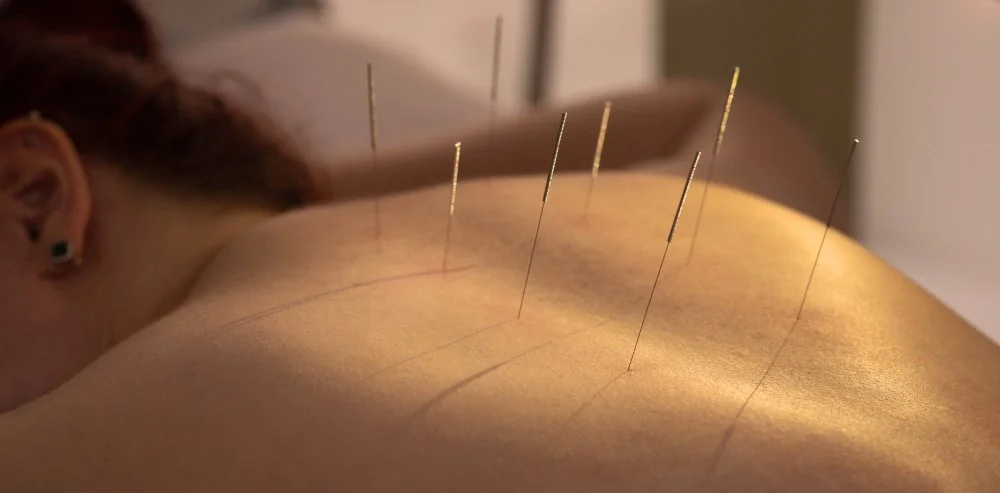
A session begins with a discussion about your health, followed by traditional diagnostic methods such as looking at your tongue and feeling your pulse. Fine, sterile needles are then gently inserted into specific points on the body to address patterns of tension or imbalance and support the body’s natural healing responses.
In some cases, such as injuries or pain conditions, electro-acupuncture may be used. This involves a mild electrical current applied through the needles to support circulation and recovery. Cupping therapy or Tui Na may also be included where appropriate to help relieve tension and improve movement.
Treatments generally last approximately 60 minutes and often include a short period of Craniosacral Therapy at the end. This supports deeper nervous system settling and helps integrate the treatment.
Each session is tailored to your individual needs, whether you are seeking support for specific concerns or general wellbeing.
What Acupuncture Can Help With
Acupuncture is commonly used to support a wide range of concerns, including:
Respiratory issues
Pain and injury
Digestive concerns
Neurological issues, including headaches and migraines
Sleep difficulties
Stress, anxiety, and low mood
Fatigue and burnout
Gynaecological health, menopause, and fertility support
Ann Marie’s Approach
Ann Marie integrates both Traditional Chinese Medicine (TCM) and Classical Chinese Medicine (CCM), having trained in TCM in Ireland, and Classical Chinese Medicine abroad.
TCM is a more modern system, developed in the mid-20th century, offering clear diagnostic frameworks that make it accessible and effective in modern day practices.
Classical Chinese Medicine is rooted in much older medical texts and places greater emphasis on the inner life of the person, including emotional experiences, trauma, life events, and a person’s sense of meaning and vitality. It often works more deeply with the psychological and spiritual dimensions of health.
While TCM recognises emotional health through general patterns of imbalance, Classical Chinese Medicine allows for a deeper understanding of individual experience. By integrating both approaches, treatments can be highly personalised, addressing not only symptoms but the deeper patterns influencing health and wellbeing.
Fertility Acupuncture
About Fertility Acupuncture
Fertility acupuncture offers gentle, individualised support for people trying to conceive, whether naturally or alongside assisted fertility treatments, by supporting the body’s natural rhythms, hormonal balance, and overall vitality.
Rather than focusing on fertility in isolation, treatment considers the whole person, including stress levels, menstrual health, sleep, digestion, and emotional wellbeing, all of which play an important role in reproductive health.
In Chinese Medicine, fertility is linked to the balance of Qi, Blood, Yin, and Yang, and the health of the organ systems involved in reproduction. Acupuncture can help support circulation, nervous system regulation, and hormonal communication, helping create conditions that are more supportive of conception.
Treatments are gentle and paced appropriately, with care taken to avoid overstimulation. Sessions aim to support both the physical and emotional aspects during what can be a demanding and sensitive time.
Fertility acupuncture may be supportive:
When trying to conceive naturally
In preparation for IVF or other assisted treatments
During treatment cycles
After loss or periods of difficulty
When seeking to regulate cycles or support overall reproductive health
Treatments are fully individualised and may also include a short period of Craniosacral Therapy at the end of each session if desired.
This approach recognises that stress, emotional strain, and nervous system balance all play a role in reproductive wellbeing, offering a supportive complement to other fertility treatments.
This support is offered in a calm, confidential setting, with a focus on safety and comfort for everyone involved in the fertility journey.
Male Fertility Support
Fertility acupuncture can also support male reproductive health. In Chinese Medicine, male fertility is often affected by stress, overwork, poor sleep, and emotional strain, all factors that can influence reproductive health and sperm quality.
Acupuncture treatment for male fertility is gentle and individualised, and may help support:
Sperm quality and motility
Hormonal balance
Circulation and vitality
Stress reduction and nervous system regulation
Support can be used on its own or alongside treatment for a partner, and may be helpful when preparing for assisted fertility treatments or supporting overall reproductive health.
Craniosacral Therapy
About Craniosacral Therapy
Craniosacral Therapy (CST) is a gentle, hands-on approach that supports the body’s own natural ability to release tension, rebalance, and improve wellbeing. By working with the subtle rhythms of the craniosacral system, which includes the membranes and fluid surrounding the brain and spinal cord, CST can help improve physical, emotional, and nervous system health.
How It Works:
CST is very gentle and non-invasive. Using light touch, the therapist tunes into the body’s subtle movements and facilitates the release of tension and restrictions that have developed over time due to stress, injury, trauma, or habitual patterns.
Through this process, the body is supported in finding balance and encouraging its own natural healing responses.
What can CST help with:
Craniosacral Therapy can support:
Relaxation and stress relief
Anxiety
Improved sleep and energy
Pain and tension
TMJ discomfort and teeth grinding
Trauma recovery and emotional release
Enhanced nervous system regulation
Pregnancy and post partum wellbeing
Infant colic, reflux and feeding difficulties
Tension from birth experiences (e.g. forceps, suction, c-section)
Children with sensory sensitivities and developmental challenges
Who Can Benefit:
Craniosacral Therapy is suitable for people of all ages, from newborns to older adults. It can support anyone looking to enhance their overall sense of wellbeing, relieve tension, and encourage the body’s own natural ability to maintain balance. Whether you are seeking a calming, restorative experience or gentle support alongside other health practices, CST offers a gentle and nurturing approach that meets each person where they are.
What to Expect:
Sessions are held in a calm, safe, and supportive environment.
You will lie comfortably on a treatment table, while very light and gentle hands-on techniques are used to assess and support areas of tension.
Sessions are deeply relaxing and many people report feeling lighter, more grounded, and more connected to their own natural healing capacity after a session.
How long does a session last:
A typical Craniosacral Therapy session lasts 45 to 50 minutes of hands-on work. Please allow up to 60 minutes in total to include time for consultation and settling in, so you can feel fully comfortable and supported throughout your session.
Why Choose CST with Ann Marie:
Ann Marie is a qualified Craniosacral Therapist and Teaching Assistant with the Upledger Institute. Her approach combines technical skill with a trauma aware, person centred philosophy. She works with sensitivity, supporting both those experiencing physical or emotional challenges and also those seeking general wellbeing and balance.
Tui Na Massage
About Tui Na
Tui Na (pronounced twee na), meaning “push and grasp”, is a form of therapeutic massage that originated in China. It is a fundamental part of the Traditional Chinese Medicine system and is widely used in hospitals in China, often as a first-line treatment.
Tui Na is based on the understanding that when there are blockages or stagnation in the body, pain and illness can arise. By promoting the movement of Qi and Blood, Tui Na helps relieve tension, support circulation, and encourage the body’s natural ability to restore balance.
Treatment may involve working with the muscles, joints, and soft tissues to:
· Release tension and muscle spasm
· Mobilise joints and improve range of motion
· Support circulation and nerve regulation
A variety of techniques are used, including rolling, kneading, pressing, and gentle percussive movements, applied with the hands, fingers, or elbows as appropriate.
Unlike relaxation massage, Tui Na is therapeutic and treatment focused, while still being supportive and calming. Pressure is always adapted to the individual, ranging from very gentle to firmer work, depending on your needs and comfort.
Treatment Approach
Tui Na is not offered as a stand-alone treatment but may be included as part of a session when it is clinically appropriate, often alongside acupuncture or other therapies.
What Tui Na May Support
Tui Na may be helpful for a range of acute or chronic conditions, including:
Sports injuries
Back pain and sciatica
Shoulder, jaw, and neck pain
Repetitive strain injuries
Supporting circulation of blood and lymph
Fatigue, stress, and insomnia
Fertility and gynaecological support
Digestive discomfort
Muscle relaxation and tone
Chinese Herbal Medicine
About Chinese Herbal Medicine
Chinese Herbal Medicine is a core part of Traditional and Classical Chinese Medicine and has been used for thousands of years to support health, vitality, and resilience. It works alongside other therapies or as a standalone treatment, supporting the body from the inside out.
Rather than targeting symptoms in isolation, Chinese Herbal Medicine addresses patterns of imbalance within the whole person, taking into account physical health, emotional wellbeing, lifestyle, and constitution.
How Chinese Herbal Medicine Works
In Chinese Medicine, health depends on the balanced movement and nourishment of Qi, Blood, Yin, and Yang, as well as the harmonious functioning of the organ systems. Herbal formulas are used to gently support these systems, helping the body restore balance over time.
Formulas are made up of carefully selected combinations of herbs that work together. This allows the herbs to be supportive, regulating, and adaptable, rather than overly stimulating or suppressive. Herbal medicine works gradually, supporting long-term change and strengthening the body’s own capacity for regulation and recovery.
How is a Herb or formula chosen
Chinese Herbal Medicine is always prescribed on an individual basis. Two people with similar symptoms may receive very different formulas, depending on their constitution, underlying patterns, and life context.
All of the following are taken into consideration when prescribing herbs:
Physical symptoms and medical history
Emotional and stress-related influences
Digestive strength and energy levels
Sleep, menstrual health, and overall vitality
Long-standing patterns or recurring imbalances
Herbal prescriptions are reviewed and adjusted as needed, ensuring they remain appropriate and supportive as your body responds and changes.
What Herbal Medicine Can Support
Chinese Herbal Medicine is commonly used to support:
Digestive and gut health
Fatigue, burnout, and low energy
Stress, emotional strain, and nervous system imbalance
Sleep difficulties
Hormonal and reproductive health
Immune and respiratory support
Recovery from illness or long-term strain
Herbs may be used on their own or alongside another therapy, depending on your needs.
What to Expect
Herbal consultations are thorough, allowing time to understand your health in context. Prescriptions may be given as raw herbs, powders, granules, or pills, depending on what is most suitable for you.
Consultations can last up to 60 minutes and repeat consultations last up to 30 minutes.
Clear instructions are provided, and support is available if questions arise. Herbal medicine is introduced gently, with attention to safety, tolerability, and integration with other treatments or medications.
Begin Your Journey
Ready to Heal?
We look forward to welcoming you to Nádúr Wellness Centre. Contact Ann Marie to book your appointment and start your path to wellbeing.
Available Tuesday – Friday
Clonmel, Co. Tipperary